Socotra Dragon Blood Trees
Located 240 kilometers east of the Horn of Africa in the Arabian Sea, Socotra is an isolated fragment of the ancient supercontinent Gondwana, preserving ancient ecosystems atop weathered limestone plateaus.
Rifting from the Arabian Shield
Unlike oceanic volcanic islands like the Galápagos or Hawaii, which emerge directly from undersea hot spots, Socotra is a continental sliver. During the Oligocene and Miocene epochs (between 34 and 10 million years ago), the opening of the Gulf of Aden tore this landmass away from the southern margin of the Arabian Peninsula.
Because it has remained isolated from continental landmasses ever since, its flora and fauna avoided replacement by modern continental species. Over 37% of Socotra's 825 plant species are found nowhere else on Earth, earning it recognition as a unique living museum of ancient flora.
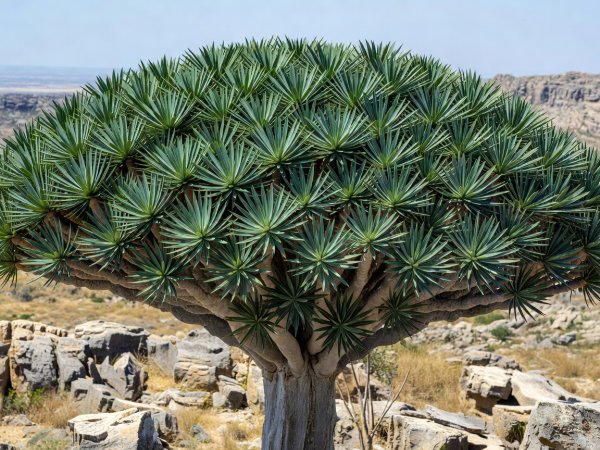
The Dragon's Blood Adaptation (Dracaena cinnabari)
The most striking geological feature of Socotra is its elevated limestone karst plateaus, such as the Diksam and Homhil platforms. These porous Cretaceous limestone beds drain rainwater rapidly, leaving thin, nutrient-poor soils exposed to drying monsoon winds.
The Dragon's Blood Tree (Dracaena cinnabari) adapted to this dry karst terrain by developing an umbrella-shaped canopy. During summer monsoons, ocean air condenses into thick fog across the plateaus. The upward-pointing, waxy leaves trap airborne water droplets, which run down branches to the central trunk, delivering moisture directly to the root zone beneath the canopy shade.
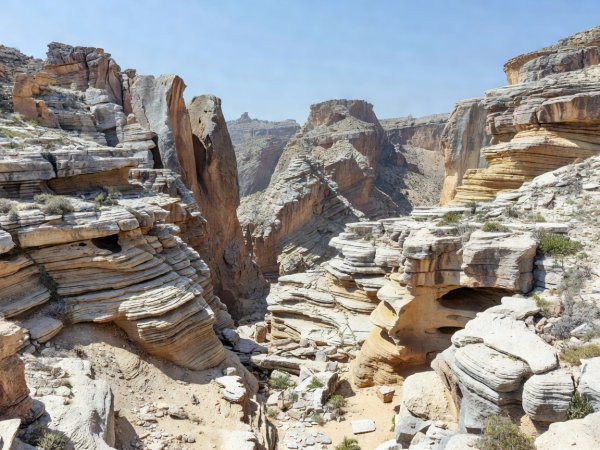
Geological & Ecological Characteristics of Socotra
The landscape of Socotra reflects millions of years of wind erosion, limestone dissolution, and botanical adaptation:
| Ecological Variable | Metric / Trait | Significance |
|---|---|---|
| Tectonic Age of Isolation | ~18 – 23 Million Years | Prolonged evolutionary separation from Afro-Arabian genetic stock |
| Endemic Plant Ratio | 37% of 825 species | One of the highest concentrations of island plant endemism on Earth |
| Bedrock Composition | Precambrian Granites & Mesozoic Limestone | Basement shield rocks capped by marine carbonate sediments |
| Moisture Source | Orographic Fog Condensation | Supplements meager 150mm annual rainfall through leaf capture |
Studying Socotra helps geoscientists and botanists understand how microclimates and stable karst landscapes can sustain ancient plant lineages through long periods of planetary climate change.